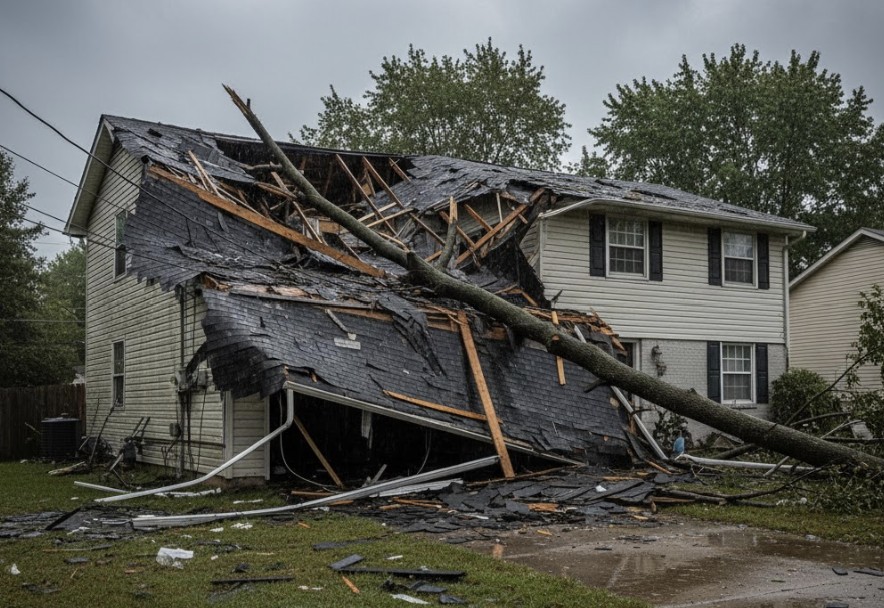
Hailstorms are one of the most destructive weather events for roofing systems in New England. In states like Massachusetts and Connecticut, storms can sweep through in minutes, leaving behind cracked shingles, dented gutters, and hidden leaks that compromise a home’s structure. Unfortunately, there’s a lot of confusion around what hail damage looks like and how homeowners should respond. Misconceptions can cost thousands in repairs, or worse, lead to premature roof failure.
At JP Carroll Roofing, we’ve seen the long-term impact of hailstorms on commercial and residential roofs for more than 30 years. Below, we break down the myths vs. facts about hail damage and share what you should do immediately after a storm to protect your property.
Common Myths About Hail Damage
Myth 1: If I Don’t See Leaks, My Roof Is Fine
Fact: Hail damage is often invisible from the ground. Shingles may lose protective granules, or cracks may form beneath the surface. These issues won’t cause leaks right away, but they weaken the roof and make it vulnerable to future storms.
Myth 2: Only Large Hailstones Cause Damage
Fact: Even hail as small as a quarter can bruise shingles, dent flashing, or puncture roofing membranes on commercial properties. The roof’s age and material type play a big role in how much damage occurs.
Myth 3: My Insurance Won’t Cover Hail Damage
Fact: Most homeowner insurance policies cover hail damage. The challenge is proving it. Insurance adjusters require detailed inspections and photo documentation, something a professional roofing company can provide.
Myth 4: Hail Damage Is Just a Cosmetic Issue
Fact: It’s not just about appearances. Once the protective top layer of shingles is compromised, your roof is more prone to leaks, mold growth, and premature aging. Over time, what seemed minor can turn into major structural damage.
Myth 5: I Can Inspect the Roof Myself
Fact: While you may be able to spot obvious damage, most hail-related issues are subtle and require trained eyes. Walking on a damaged roof is also dangerous. A professional inspection is always the safest choice.
Why Hail Damage Is So Serious
Hailstorms don’t just affect shingles, they impact the entire roofing system. Gutters can dent, reducing drainage efficiency. Skylights and vents may crack, allowing moisture intrusion. On commercial buildings, flat roof membranes like TPO or EPDM can develop punctures that spread water across wide areas.
In both residential and commercial settings, untreated hail damage accelerates roof wear. A roof that should last 20–30 years might only last 10–15 if hail damage is ignored.
What to Do After a Storm
1. Document the Damage
Take photos of your yard, gutters, windows, and any visible roofing issues from the ground. These photos help build your insurance claim.
2. Schedule a Professional Inspection
A roofing professional can assess whether the damage is cosmetic or structural. At JP Carroll Roofing, we provide detailed reports and documentation tailored for insurance adjusters.
3. Contact Your Insurance Company
Report the storm damage as soon as possible. The faster you act, the smoother the claims process typically goes.
4. Make Temporary Repairs if Necessary
If leaks have already started, use tarps or buckets as a short-term solution. Avoid climbing onto the roof yourself.
5. Plan for Long-Term Repairs or Replacement
Depending on the severity of the hailstorm, your roof may only need repairs, or it may require a full replacement. Either way, working with an experienced roofing contractor ensures the right materials and installation methods are used for New England’s demanding weather.
How JP Carroll Roofing Helps After Hailstorms
With decades of experience across Massachusetts and Connecticut, JP Carroll Roofing understands the unique roofing needs of New England homeowners and businesses. Our services include:
- Roof Inspections – Identifying both visible and hidden hail damage.
- Roof Repair – Fixing leaks, replacing damaged shingles, repairing flashing, and restoring gutter systems.
- Roof Replacement – Installing high-performance materials like GAF shingles, slate roofing, and energy-efficient systems designed to withstand harsh storms.
- Insurance Support – Providing thorough documentation and working with adjusters to ensure claims are processed accurately.
We don’t just fix roofs, we protect your investment, your home, and your peace of mind.
Final Thoughts
Hail damage myths can leave homeowners vulnerable to costly surprises. The truth is that hail, no matter the size, can compromise your roof’s integrity in ways you can’t always see. Acting quickly, documenting, inspecting, and repairing, will save you from future headaches and expenses.
If your home or business in Massachusetts or Connecticut has been hit by a storm, contact JP Carroll Roofing today for professional inspections, repairs, and replacements. Protect your roof before small issues turn into major problems.